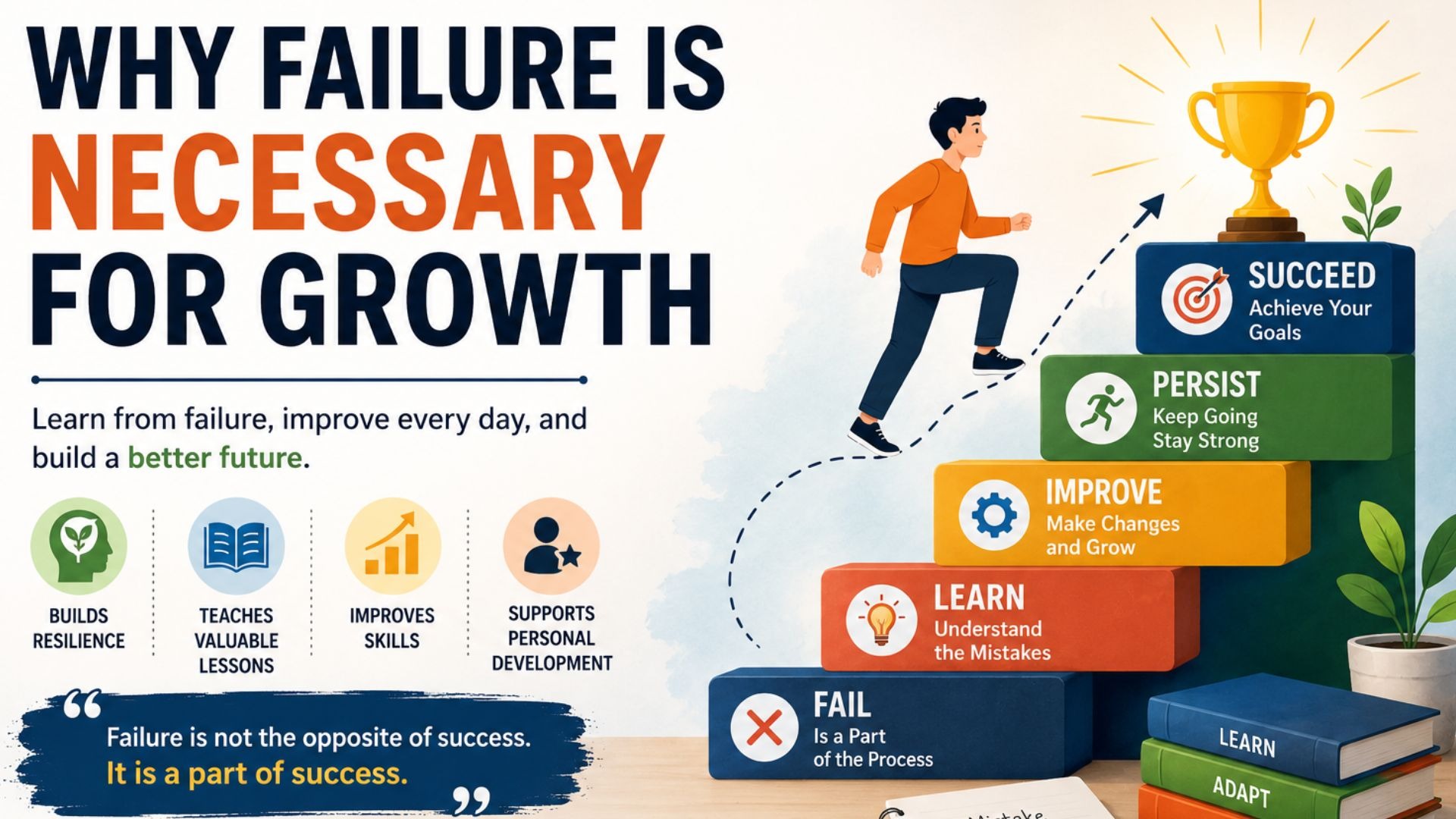
Why Failure Is Necessary for Growth

Why Failure Is Necessary for Growth

1. Understanding the True Meaning of Failure

Failure is often seen as a negative outcome, but it is actually a learning experience. It happens when a goal is not achieved, but it also provides an opportunity to understand mistakes and improve. The importance of failure in life becomes clear when we view failure as a stepping stone rather than an obstacle. 

2. How Failure Builds Resilience 

Resilience is the ability to recover from challenges and keep moving forward. Failure helps build resilience by teaching people how to handle setbacks and adapt to difficult situations.

Key benefits include:

● Improved problem-solving skills
● Greater patience
● Stronger determination
● Better ability to handle future challenges
This is one of the biggest benefits of learning from failure. 

3. Failure Teaches Valuable Life Lessons

Every failure contains a lesson. These lessons help people make better decisions in the future.
Failure teaches:
● Responsibility for actions
● Importance of preparation
● Value of persistence
● Need for continuous improvement
The importance of failure in life lies in the lessons it provides that success often cannot teach. 

4. Why Successful People Embrace Failure 

Most successful people have experienced failure before achieving their goals. They understand that mistakes are part of the learning process.
Successful people often:
● Accept mistakes as feedback
● Learn from their experiences
● Continue trying after setbacks
● Focus on improvement instead of perfection
Their success often comes from learning from failure rather than avoiding it. 

5. The Role of Failure in Personal Development 

Personal development involves improving skills, knowledge, and character. Failure plays an important role in this process.
It helps people:
● Develop self-awareness
● Improve decision-making
● Increase adaptability
● Build confidence through experience
The importance of failure in life is closely connected to long-term personal growth. 

6. Turning Failure into Future Success 

Failure becomes valuable when lessons are applied to future efforts.
Steps to turn failure into success:
● Identify what went wrong
● Learn from mistakes
● Create a better plan
● Practice consistently
● Stay committed to goals
This approach makes learning from failure an important part of achieving success. 

7. How Repeated Practice Leads to Improvement 

Improvement rarely happens after one attempt. Repeated practice allows people to correct mistakes and strengthen their skills.
Benefits of practice include:
● Better performance
● Increased confidence
● Greater accuracy
● Stronger knowledge retention
Failure during practice often leads to significant improvement over time. 

8. What Science Says About Failure and Growth 

Research suggests that failure supports learning and development.

Key Findings

● The brain learns by correcting mistakes.
● Challenges strengthen critical thinking.
● Feedback improves future performance.
● Failure can increase resilience.
● Repeated effort improves long-term learning.
● Mistakes help develop problem-solving abilities.
These findings support the value of learning from failure in everyday life. 

Frequently Asked Questions (FAQ)

1. Why is failure important in life?
Failure helps people learn from mistakes, improve skills, and develop resilience.
2. How does learning from failure improve success?
It helps identify weaknesses, make better decisions, and avoid repeating mistakes.
3. Can failure increase confidence?
Yes. Overcoming setbacks often builds confidence and self-belief over time.
4. What is the biggest lesson failure teaches?
Failure teaches persistence and helps people understand how to improve.