Introduction
Focus and concentration help children learn, understand, and complete tasks effectively. Good concentration supports better academic performance and daily learning. However, many children struggle to stay focused due to distractions, habits, or lack of interest.
Parents and teachers can support children through simple activities to improve concentration in children. These activities help strengthen attention skills over time. Regular practice of activities to improve concentration in children can improve learning, memory, and problem-solving abilities. Choosing the right activities to improve concentration in children can make studying easier and more enjoyable.
1. Understanding Concentration in Children
Concentration is the ability to focus on one task without getting distracted.
Children use concentration when they:- Read a book
- Solve a math problem
- Listen to a teacher
- Complete homework
- Learn a new skill
Strong concentration helps children process information more effectively and achieve better learning outcomes.
- Read a book
- Solve a math problem
- Listen to a teacher
- Complete homework
- Learn a new skill
2. Why Some Children Focus Better Than Others
Every child is different. Some children naturally focus longer, while others get distracted more easily.
Factors that affect focus include:- Age and developmental stage
- Sleep quality
- Nutrition
- Learning environment
- Interest in the activity
- Daily routines
Children often focus better when tasks are engaging and appropriate for their age.
3. The Science Behind Children's Attention Span
The brain controls attention through networks responsible for learning and memory.
Important facts include:- Attention develops gradually as children grow.
- Practice strengthens focus-related brain functions.
- Repetition helps improve concentration skills.
- Mental exercises can train the brain to stay attentive.
This is why regular activities to improve concentration in children can lead to long-term benefits.
4. Environmental Factors That Affect Concentration
A child's surroundings play an important role in attention and learning.
Common environmental distractions include:- Television noise
- Mobile phones
- Loud conversations
- Cluttered study spaces
To create a better learning environment:- Choose a quiet study area.
- Keep the desk organized.
- Reduce unnecessary screen use.
- Follow a consistent study schedule.
A calm environment supports better concentration.
5. Motivation and Interest in Learning
Children focus more when they enjoy what they are doing.
Ways to increase motivation:- Set small achievable goals.
- Use positive encouragement.
- Connect learning to real-life situations.
- Allow children to explore their interests.
When children feel interested in a task, concentration improves naturally.
6. Confidence and Emotional Well-Being
Emotions affect attention and learning.
Children may struggle to focus when they:- Feel anxious
- Lack confidence
- Fear making mistakes
- Feel stressed
Parents and teachers can help by:- Praising effort instead of results
- Creating a supportive environment
- Encouraging questions
- Helping children learn from mistakes
Positive emotions support stronger concentration skills.
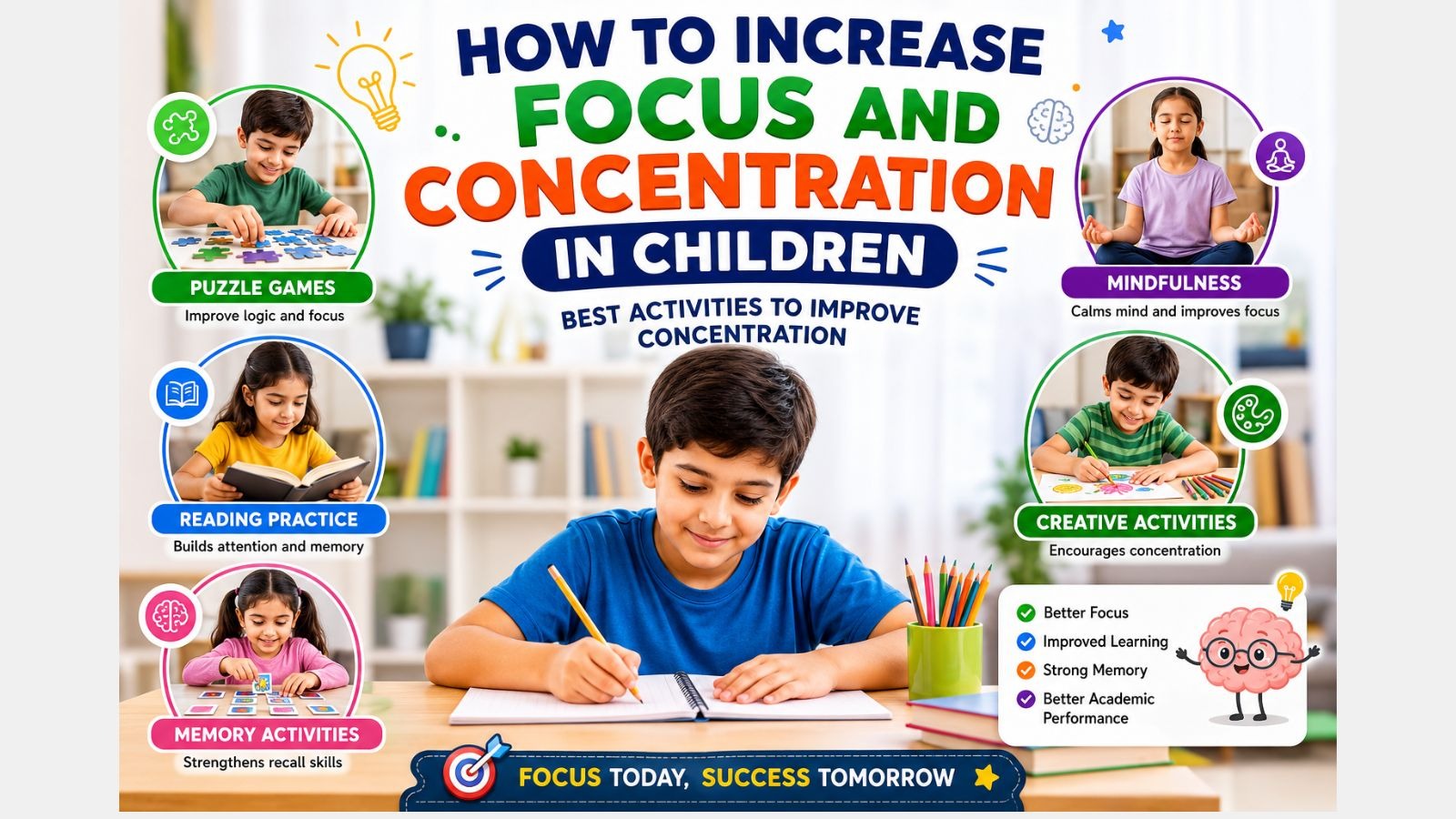
7. Best Activities to Improve Concentration in Children
Practical exercises can strengthen attention and focus.
Popular activities to improve concentration in children include:
Puzzle Games
- Jigsaw puzzles
- Sudoku
- Logic puzzles
Memory Activities
- Matching card games
- Memory challenges
- Recall exercises
Reading Practice
- Daily reading sessions
- Story summaries
- Reading aloud
Mindfulness Exercises
- Deep breathing
- Quiet observation activities
- Simple meditation exercises
Creative Activities
- Drawing
- Coloring
- Building blocks
These activities to improve concentration in children encourage patience, attention, and problem-solving.
8. What Research Says About Improving Focus
Research highlights several factors that support concentration:
- Regular physical activity improves attention.
- Quality sleep supports brain function.
- Reading strengthens focus and memory.
- Mindfulness exercises improve self-control.
- Consistent routines help children stay organized.
- Learning through play can improve concentration.
Experts agree that regular practice is important for long-term improvement.
Key Takeaway
- Concentration is a skill that develops over time.
- Sleep, nutrition, and environment affect focus.
- Motivation increases attention and learning.
- Emotional well-being supports concentration.
- Regular activities to improve concentration in children can strengthen attention skills.
- Consistent practice leads to better learning outcomes.
Frequently Asked Questions
1. What are the best activities to improve concentration in children?
Puzzle games, reading, memory exercises, mindfulness activities, and creative tasks are highly effective.
2. How can parents help children focus better?
Parents can create a quiet study space, maintain routines, encourage healthy habits, and provide positive support.
3. Does screen time affect concentration?
Excessive screen time may reduce attention span and increase distractions if not managed properly.
4. How long does it take to improve concentration?
Improvement varies for each child, but regular practice often shows results within a few weeks.
Featured Snippet (Quick Answer)
The best activities to improve concentration in children include puzzles, reading, memory games, mindfulness exercises, and creative activities. These exercises help strengthen attention, improve learning, and support better academic performance when practiced regularly.