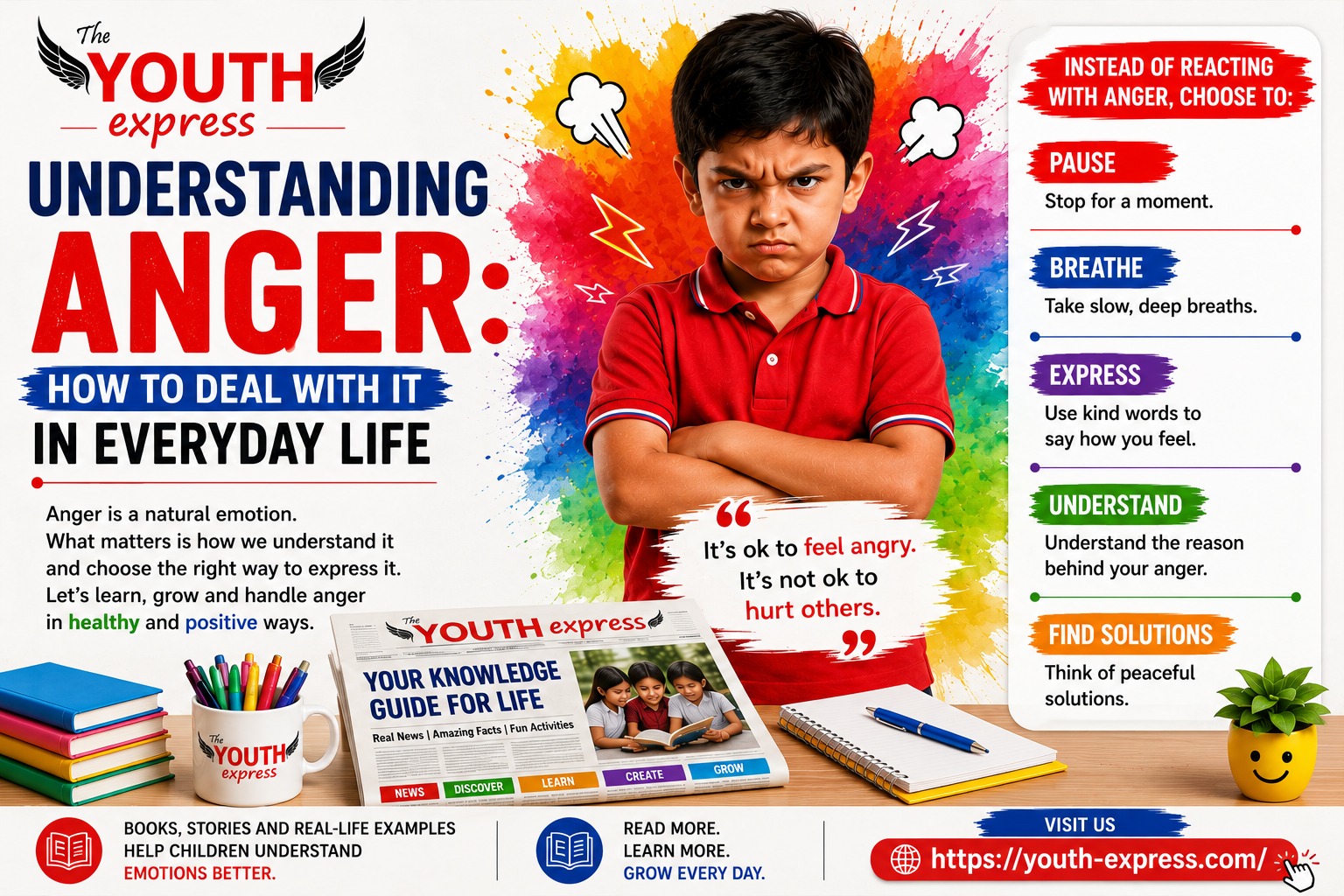
Anger is a natural part of life. Everyone gets angry sometimes—children, teenagers, parents, and even teachers. A child may feel angry when a sibling takes their favourite toy, a friend does not include them in a game, homework feels difficult, or they are asked to stop playing.
Feeling angry is not wrong. What matters is how we respond to anger.
Learning to understand anger can help children express their feelings in healthy ways, make better decisions, solve problems, and build stronger relationships with the people around them.
For children, learning about emotions is just as important as learning about numbers, language, or science. When children understand what they are feeling, they can learn how to handle difficult moments with greater confidence.
What Is Anger?
Anger is an emotional response that can happen when we feel hurt, frustrated, disappointed, ignored, embarrassed, or treated unfairly.
Sometimes the reason for anger is easy to understand. At other times, several small things can build up and suddenly make us feel very angry.
For example, a child may have had a tiring day at school, struggled with homework, and then argued with a sibling. The argument may seem like the reason for the anger, but tiredness and frustration may have already been building.
Anger can affect both the mind and body. A child may speak loudly, clench their fists, feel restless, cry, or find it difficult to think clearly.
Recognising these signs is the first step towards managing anger.
Why Do Children Get Angry?
Children can experience anger for many different reasons. Some common causes include:
Losing a game or competition
Getting a lower score than expected
Having an argument with a sibling
Feeling left out by friends
Being teased or misunderstood
Finding homework difficult
Being told “no”
Having to stop playing or using a screen
Feeling tired or hungry
Having plans suddenly changed
Feeling that something is unfair
Sometimes children also struggle to explain their emotions. They may say, “I am angry,” when they are actually feeling hurt, embarrassed, disappointed, or worried.
Helping children identify the feeling behind their anger can make it easier for them to deal with it.
Anger Is Normal, But Hurtful Actions Are Not
One of the most important lessons children can learn is that having an emotion and acting on it are two different things.
It is okay to feel angry.
It is not okay to hit someone, throw things, break belongings, or use hurtful words because of anger.
For example, instead of hitting a sibling who takes their toy, a child can say:
“I am angry because you took my toy without asking.”
Using words gives others a chance to understand the problem and find a solution.
How to Deal With Anger in Everyday Life
Managing anger is a skill, and like any skill, it improves with practice. Here are some simple strategies children can use.
1. Pause Before You React
When you feel angry, stop for a moment before saying or doing anything.
A short pause can prevent an angry reaction from becoming a bigger problem.
Ask yourself:
“What am I feeling?”
“What happened?”
“What should I do next?”
2. Take Deep Breaths
Slow breathing can help the body relax.
Try taking five slow breaths. Breathe in gently, pause for a moment, and then breathe out slowly.
This simple exercise can give your mind time to settle.
3. Count to Ten
Counting slowly from one to ten can create a gap between the feeling and the reaction.
If you are still very angry, count to twenty or thirty.
The purpose is not to ignore the anger. It is to give yourself time to choose your response.
4. Use Words to Express Your Feelings
Instead of shouting, blaming, or insulting someone, explain what made you upset.
For example:
“I felt upset when you interrupted me.”
“I was disappointed because I wanted to win.”
“I don't like it when my things are taken without asking.”
Clear communication can turn an argument into a conversation.
5. Take a Short Break
If a situation is becoming too stressful, take some time away.
You can:
Drink water
Read a book
Draw or colour
Listen to calming music
Take a short walk
Sit somewhere quiet
Once you feel calmer, return to the situation and talk about it.
6. Look for a Solution
After calming down, think about what can be done.
Ask yourself:
What made me angry?
Can I change the situation?
Do I need to apologise?
Can I talk to someone about it?
These questions help children become problem-solvers instead of reacting immediately.
What Different Religions Teach About Anger
Anger is a universal human emotion, and many religious and spiritual traditions have teachings about how people can respond to it. Although each religion has its own beliefs and practices, many encourage self-control, patience, compassion, forgiveness, and peaceful behaviour.
Hinduism: Self-Control and Wisdom
Hindu philosophy places importance on controlling the mind and emotions. The Bhagavad Gita describes how uncontrolled anger can affect a person's judgement and lead to poor decisions.
For children, the lesson can be simple: when you are angry, pause and think before you act.
Taking control of a reaction can help us make wiser choices.
Buddhism: Awareness and Compassion
Buddhist teachings encourage people to develop awareness of their emotions and avoid responding to anger with hatred or harmful actions.
Children can learn to notice when anger appears, take a breath, and think about how their actions may affect another person.
Instead of immediately reacting, they can ask:
“Why am I angry, and how can I handle this peacefully?”
Christianity: Patience and Forgiveness
Christian teachings emphasise love, patience, forgiveness, and peaceful responses to conflict. The Bible encourages people to be slow to anger and to avoid responding to wrongdoing with revenge.
For children, this can mean learning to forgive, apologise when they make a mistake, and choose kind words even during disagreements.
Islam: Restraining Anger and Forgiving Others
Islamic teachings encourage believers to control anger and forgive others. The Qur'an praises those who restrain their anger and pardon people.
For children, this can be understood as a reminder that anger does not give us permission to hurt others.
Sometimes, the stronger choice is to step away, calm down, and forgive.
Sikhism: Patience and Inner Peace
Sikh teachings encourage people to overcome anger and develop qualities such as patience, humility, compassion, and self-control.
Children can apply this lesson when dealing with disagreements at home or school. Staying calm and treating others respectfully can help prevent a small disagreement from becoming a major conflict.
Jainism: Non-Violence and Self-Discipline
Jain philosophy gives great importance to ahimsa, or non-violence. It also encourages self-discipline and control over harmful emotions.
For children, this teaches an important everyday lesson: our words and actions can affect other people. Even when we are angry, we should try not to hurt others.
What These Teachings Have in Common
Religions have different traditions and beliefs, but many share a common message about anger:
Feeling angry is human, but we can choose how we respond.
Instead of reacting with violence or hurtful words, we can choose patience, understanding, forgiveness, communication, and self-control.
These values can help children not only manage anger but also become more thoughtful and compassionate people.
Anger in Everyday Situations
Anger does not only happen during major problems. It can appear during ordinary moments.
Imagine a child is playing a board game with friends and loses. They may immediately feel frustrated and want to blame someone.
Instead of throwing the game or shouting, they can pause and say:
“I am disappointed because I wanted to win.”
That simple sentence changes the situation. The child has recognised the emotion instead of allowing anger to control their behaviour.
The same approach can work at home, in school, during sports, and while spending time with friends.
Every difficult moment can become an opportunity to practise emotional control.
How Parents Can Help Children Manage Anger
Parents have an important role in helping children understand emotions.
When a child is angry, telling them to “stop being angry” may not always solve the problem. Instead, parents can acknowledge the feeling while setting clear boundaries.
For example:
“I understand that you are angry, but hitting is not okay. Let's calm down and talk about what happened.”
Parents can also teach by example. Children observe how adults respond to frustration, disagreements, mistakes, and stressful situations.
When parents communicate calmly, apologise after making mistakes, and handle disagreements respectfully, children learn from what they see.
It is also helpful to praise children when they manage anger appropriately.
For example:
“You were upset, but you explained your feelings instead of shouting. That was a good choice.”
Positive encouragement can help children repeat healthy behaviour.
Can Anger Ever Be Useful?
Anger is not always a negative experience. Sometimes it tells us that something needs attention.
A child may feel angry because someone is treating them unfairly, crossing a personal boundary, or not listening to them.
Instead of immediately reacting, children can use anger as a signal to understand the problem.
They can ask:
“What is making me feel this way?”
“Is there something I need to communicate?”
“What can I do to make the situation better?”
This helps transform anger from a reaction into an opportunity for self-awareness and problem-solving.
Final Thoughts
Anger is a normal part of everyday life. Children do not need to feel guilty simply because they become angry.
What they need to learn is how to recognise anger, understand its cause, and respond without hurting themselves or others.
Taking a pause, breathing deeply, using words, taking a break, and looking for solutions are the youth express simple habits that can make a big difference.
The teachings found across different religious traditions also remind us of the value of patience, forgiveness, compassion, self-control, and non-violence.
The goal is not to become someone who never feels angry.
The goal is to become someone who can say:
“I am angry, but I can choose what I do next.”
That is an important life skill—and one that can help children grow into calmer, kinder, and more confident individuals.