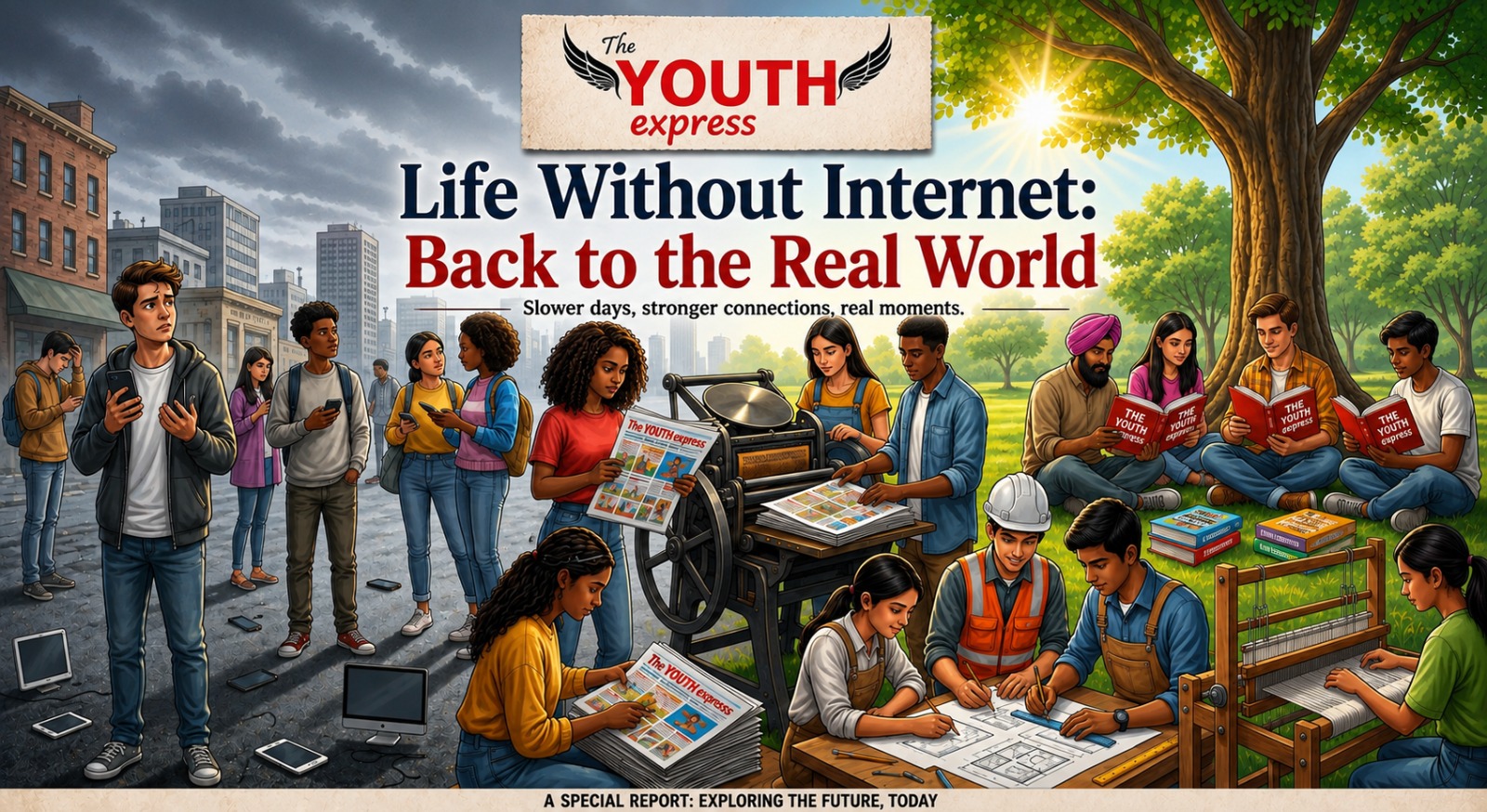
A Morning Without the Internet
Imagine waking up one morning and discovering that the internet has disappeared. There are no social media notifications, no instant messages, no online videos, no search engines, and no endless scrolling. At first, the silence might feel strange. But after some time, we may begin to notice something interesting: the world around us has not disappeared. In fact, we may start seeing it more clearly.
Life Before the Internet
Before the internet became a part of everyday life, people depended on newspapers, radio, books, letters, libraries, and face-to-face conversations for information and connection. Mornings often began with the sound of the radio or the rustling of kids newspapers.Families would sit together, discuss the day's news, and share stories. Information travelled more slowly, but people often gave it more attention.
When Communication Was Personal
Without the internet, communication would become more personal. Instead of sending a quick message, people might write letters or visit each other. A handwritten letter would not arrive instantly, but receiving one could feel special because it represented time, effort, and thought. Waiting for a letter could create excitement and anticipation that instant messages rarely provide.
Travelling Without Digital Maps
Travel would also look very different. Today, we can use online maps and navigation apps to find almost any location within seconds. In a world without the internet, travellers would depend on paper maps, road signs, and directions from other people. Asking a stranger for help could become a normal part of travelling. These small interactions might lead to conversations and even unexpected friendships.
Learning Through Books and Libraries
Libraries would become important centres of learning again. Students searching for information would have to explore books, encyclopedias, newspapers, and magazines. Finding an answer might take longer, but the process could encourage patience and curiosity. Instead of quickly searching for information and moving on, people might spend more time reading, comparing ideas, and understanding what they discover.
Stronger Communities
Life without the internet would also change how communities spend their time. People might gather in parks, town squares, cafés, community centres, and homes. Celebrations and festivals could become more focused on people being physically present rather than recording everything for social media. Conversations would happen face-to-face, allowing people to notice expressions, emotions, and reactions that can sometimes be lost behind a screen.
More Time for Creativity
Entertainment would become more physical and creative. Children might spend more time playing outdoor games, drawing, painting, reading stories, or creating their own activities. Families might play board games, listen to music, tell stories, or simply sit together and talk. Creativity could grow through simple activities that do not require a screen.
Rediscovering Nature
Nature might also become easier to appreciate. Without constant notifications and digital distractions, people could notice the changing seasons, the sound of birds, the movement of clouds, or the sound of wind through trees. A walk in a park would not necessarily mean taking pictures or checking a phone. It could simply mean enjoying the surroundings.
The Challenges of an Offline World
However, a world without the internet would not be perfect. There would be many challenges. Information would travel much more slowly, making it difficult to learn about important events immediately. Students and researchers would have to spend more time finding information. Businesses would face difficulties communicating with customers and partners. People living far away from their families would have fewer ways to stay connected.
Emergencies could also become harder to manage because instant communication would not be available. Many services that depend on the internet today would have to return to older systems. Life would certainly become slower and, in some ways, more difficult.
What We Can Learn
Yet this slower life could also teach us something valuable. The internet has made the world smaller and connected millions of people, but constant connectivity can sometimes make us forget the importance of being present. We can be connected to hundreds of people online while feeling disconnected from the person sitting next to us.
Finding Balance in the Digital Age
A world without internet reminds us that technology is a tool, not the whole of life. Human relationships, conversations, creativity, nature, books, and shared experiences existed long before screens became part of our daily routines.
Perhaps the real lesson is not that we should completely give up the internet. Instead, we should learn how to use it without allowing it to control every moment of our lives. Taking breaks from screens, spending time with family, reading a book, going outdoors, and having meaningful conversations can help us reconnect with the real world.
Conclusion
Life without internet would certainly be slower. It might sometimes be inconvenient, but it could also be quieter, more personal, and more connected to the people and world around us. In a time when almost everything is available with a click, sometimes stepping away from the screen can help us discover what truly matters.