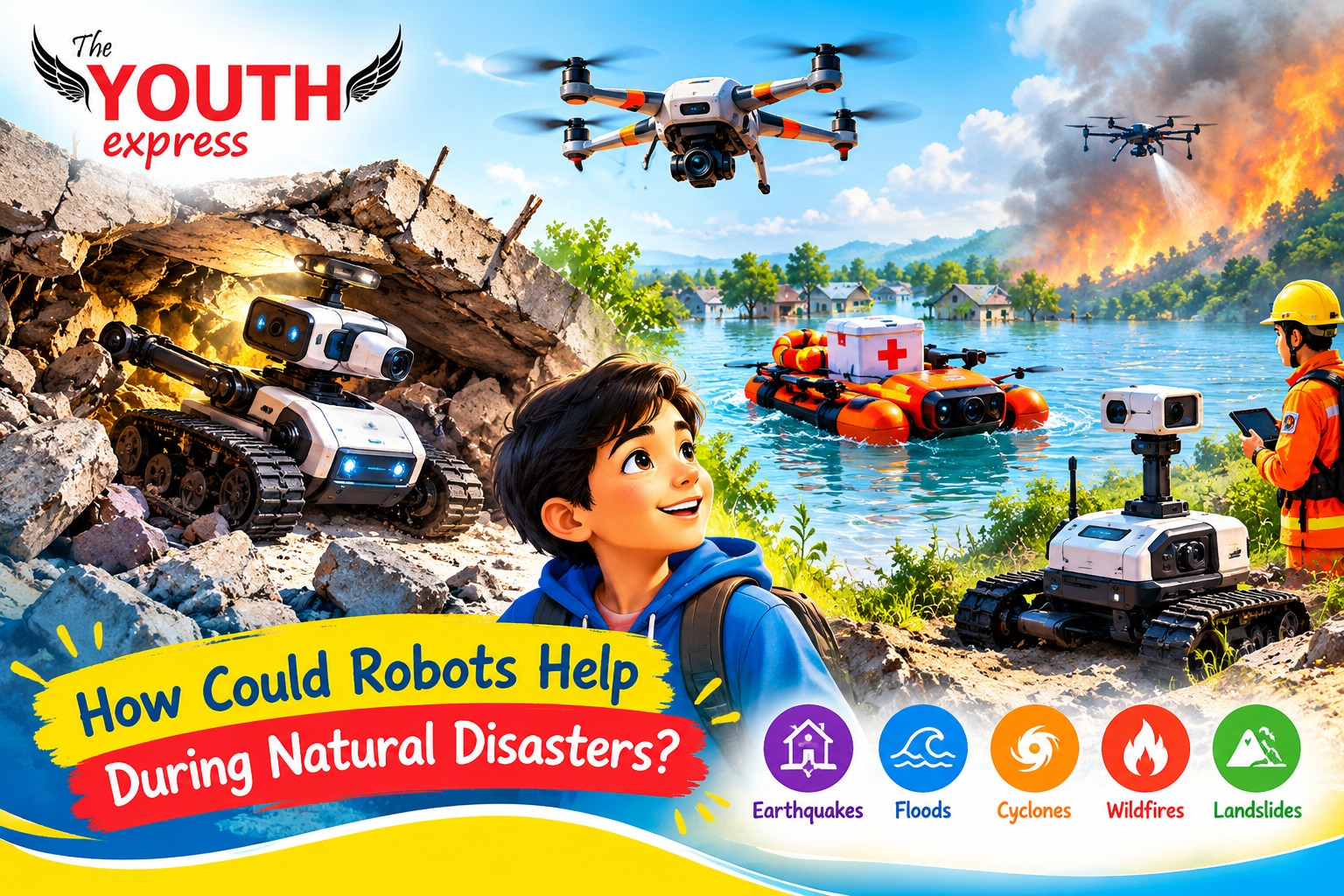
Natural disasters such as earthquakes, floods, cyclones, wildfires, and landslides can happen suddenly and cause serious damage. Roads may become blocked, buildings can collapse, and some places may become too dangerous for people to enter.
But what if machines could go into these dangerous areas and help rescue teams?
This is where robots could make a big difference.
Robots are already being developed to explore difficult environments, carry equipment, find people, and collect important information. They cannot replace human rescuers, but they can become powerful helpers during emergencies.
1. Robots Could Search Collapsed Buildings
After an earthquake or building collapse, finding people trapped under the rubble can be extremely difficult. Rescuers may not know exactly where someone is located, and moving heavy debris can sometimes make the situation more dangerous.
Small search-and-rescue robots could crawl through narrow spaces where humans cannot safely fit.
Some robots can use cameras, microphones, thermal sensors, and other tools to look for signs of life. For example, a robot might detect body heat or hear a person's voice beneath broken concrete.
Instead of sending a person into an unstable area, rescuers could first send a robot to investigate.
This is a great example of how curiosity and scientific thinking can lead to useful inventions. Children can explore more about this idea in our article on Why Curiosity Drives Invention.
2. Drones Could Search Large Areas
Not all rescue robots have to walk on the ground.
Drones are flying robots that can quickly travel over large areas. After floods, cyclones, or landslides, they could help rescue teams understand what has happened.
A drone equipped with a camera could fly over damaged roads, bridges, houses, and fields. It could also help identify people waiting for rescue.
This information could help emergency teams decide where help is needed most urgently.
For example, if a flood cuts off several villages, drones could survey the area and help rescuers understand which locations are accessible and which roads are underwater.
Technology like this shows why learning about science and technology can be so exciting for young readers.
3. Robots Could Enter Dangerous Places
Some disaster areas contain dangers that humans cannot easily see.
After a chemical accident, fire, or industrial disaster, the air might contain harmful gases. A damaged building might also be unstable.
Special robots could be sent into these areas to measure temperature, detect gases, inspect structures, or collect information.
This could protect rescue workers from unnecessary risks.
Instead of immediately sending a person into an unknown environment, teams could use a robot to learn more about the area first.
Learning about how technology solves real-world problems can also encourage children to ask questions and explore new ideas.
4. Robots Could Help During Floods
Floodwater can move quickly and hide obstacles beneath the surface. This makes rescue operations especially challenging.
Future rescue robots could be designed to float, swim, or move through shallow water.
They might carry emergency supplies such as drinking water, medicines, communication devices, or life-saving equipment to people who are difficult to reach.
Some underwater robots could also inspect bridges, pipes, dams, or other structures after flooding.
The natural world itself is full of amazing systems that scientists study to develop new technology. For example, children can learn about unusual natural navigation in Living GPS Systems: How Birds, Turtles and Bees Find Their Way.
5. Robots Could Help During Wildfires
Wildfires can spread rapidly, especially when weather conditions are dry and windy.
Robots could potentially help firefighters by entering areas that are too hot or dangerous for people. They could collect information about fire temperature, smoke, wind conditions, and the direction of the flames.
Ground robots might also help carry equipment or clear certain areas, while drones could provide firefighters with a bird's-eye view of the fire.
The goal would not be to let robots fight every fire on their own, but to give firefighters better information and safer ways to work.
6. Robots Could Deliver Emergency Supplies
Imagine being trapped in an area after a disaster and waiting for help to arrive.
A small robot or drone could potentially deliver essential supplies before a rescue team is able to reach you.
These supplies could include water, food, first-aid materials, batteries, or communication equipment.
This could be particularly useful when roads are blocked or bridges have been damaged.
It also shows that technology can be used for much more than entertainment. Children can discover more ideas for learning away from screens in 5 Effective Ways to Reduce Screen Time in Kids.
7. Robots Could Work Day and Night
Human rescuers need food, water, sleep, and rest. Robots do not get tired in the same way.
Once properly designed and powered, some robots could continue working for long periods. They could search areas, monitor damaged buildings, or collect information while rescue teams take necessary breaks.
However, robots still need people to operate, supervise, maintain, and make decisions about their use.
This is why the future of technology is not simply about making smarter machines. It is also about teaching young people how to think critically, ask questions, and understand the world around them.
Can Robots Replace Rescue Workers?
No.
Robots can be extremely useful, but they cannot replace the experience, judgment, compassion, and decision-making skills of human rescuers.
A robot may find a person trapped under rubble, but trained rescuers are needed to decide how to safely reach and help that person.
The best approach is likely to be humans and robots working together.
Robots can handle dangerous or difficult tasks, while people can make important decisions and provide direct care.
The Future of Disaster Rescue
As technology improves, disaster-response robots may become smaller, smarter, stronger, and more capable.
Scientists and engineers are working on machines that can walk over uneven ground, fly through difficult environments, swim underwater, recognize objects, and collect information.
In the future, a rescue team might arrive at a disaster site with a group of different robots—flying drones for aerial searches, ground robots for rubble, and underwater robots for flooded areas.
These machines could help rescuers see places they cannot safely reach and make decisions based on better information.
The development of such technology is another reminder that curiosity can turn questions into discoveries and discoveries into inventions.
Final Thoughts
Natural disasters can be frightening and unpredictable, but technology can give people new tools to respond to them.
Robots could help search for survivors, explore dangerous areas, deliver supplies, monitor disasters, and provide valuable information to rescue teams.
The most exciting part is not imagining robots replacing humans. It is imagining a future where humans and robots work together to save more lives.
For young readers, this is also a reminder that science is not only about discovering how the world works—it can also be about creating solutions that make the world safer and better for everyone.
Reading about science, technology, nature, and new discoveries can encourage children to stay curious—and today's curious child could become tomorrow's scientist, engineer, inventor, or problem-solver.