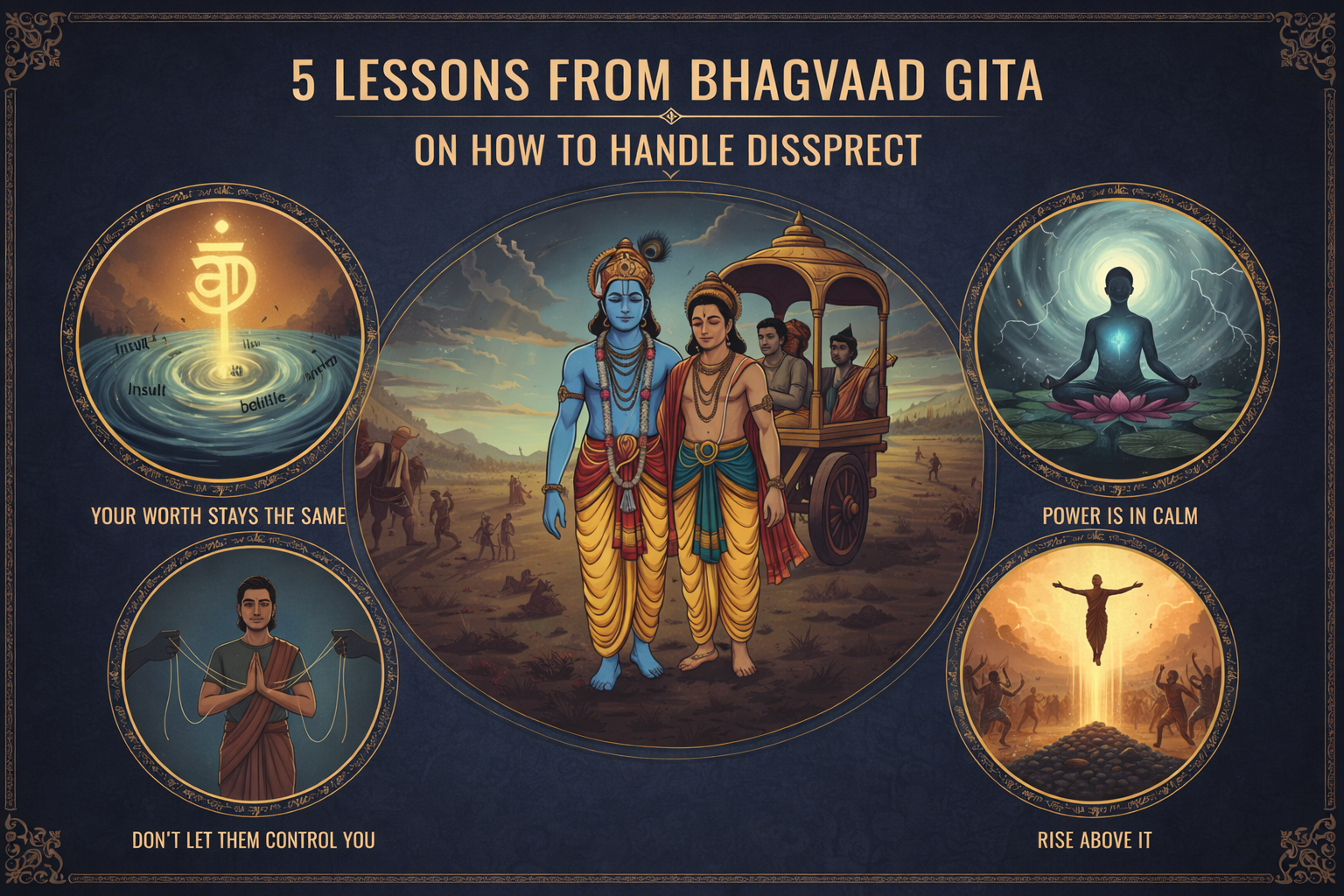
Disrespect is an inevitable part of life—whether it comes from colleagues, friends, family, or society. The Bhagavad Gita, one of the most profound spiritual texts, offers timeless wisdom on emotional strength, self-control, and inner peace. Through the teachings of Lord Krishna, we learn how to rise above negativity without losing our dignity.
In this blog, we explore 5 powerful lessons from the Bhagavad Gita on how to handle disrespect with calmness, clarity, and confidence.
1. Your Worth Stays the Same
One of the most important teachings of the Bhagavad Gita is that your true self (Atman) is eternal and unchanging. Disrespect from others does not reduce your value. It only reflects their mindset and emotional state.
When someone insults or belittles you, Krishna’s wisdom reminds us not to tie our self-worth to external opinions. Respect that depends on others is fragile, but self-respect rooted in self-awareness is unshakable.
Gita Insight: You are not the body, status, or labels—your essence is beyond praise and insult.
Practical takeaway: Stay rooted in who you are. Do not let someone else’s behavior decide your self-worth.
2. Power Is in Calm
The Bhagavad Gita repeatedly emphasizes equanimity—remaining calm in pleasure and pain, success and failure, respect and disrespect. Reacting impulsively to disrespect often leads to regret and loss of control.
Choosing calm over reaction is not weakness; it is strength. A calm mind allows you to respond wisely instead of reacting emotionally.
Gita Insight: A steady mind is the mark of a wise person.
Practical takeaway: Pause before responding. Your silence or composed reply can be far more powerful than anger.
3. Don’t Let Them Control You
When someone’s words disturb your peace, they gain power over you. The Gita teaches mastery over the mind as the highest form of control. If external words can shake your inner balance, the battle is already lost.
Krishna encourages self-discipline and awareness. Emotional reactions give control to others, while mental steadiness keeps it with you.
Gita Insight: One who has conquered the mind is already victorious.
Practical takeaway: Do not hand over control of your emotions to someone else’s negativity.
4. Rise Above It
The Bhagavad Gita teaches us to operate from a higher level of consciousness. When you grow spiritually, mentally, or emotionally, petty insults naturally lose their power.
Instead of defending your ego, focus on protecting your peace. Growth makes disrespect look small and insignificant.
Gita Insight: Detachment from ego leads to freedom from suffering.
Practical takeaway: Focus on personal growth. The higher you rise, the less noise affects you.
5. Walk Away Wisely
Not every battle deserves your energy. The Gita teaches detachment, not avoidance. Walking away from disrespect is often a conscious, wise decision—not a sign of weakness.
Choosing yourself, your peace, and your values is sometimes the strongest response.
Gita Insight: Renunciation of unnecessary conflict brings inner peace.
Practical takeaway: Step back when needed. Protecting your mental peace is self-respect.
Final Thoughts
The Bhagavad Gita’s teachings on handling disrespect are deeply practical even in modern life. By staying calm, detached, and self-aware, you protect your inner peace and grow stronger emotionally.
Disrespect tests your ego—but wisdom helps you transcend it.
If you apply these five lessons consistently, you will notice a powerful shift: fewer emotional wounds, stronger self-respect, and a calmer, more confident version of yourself.